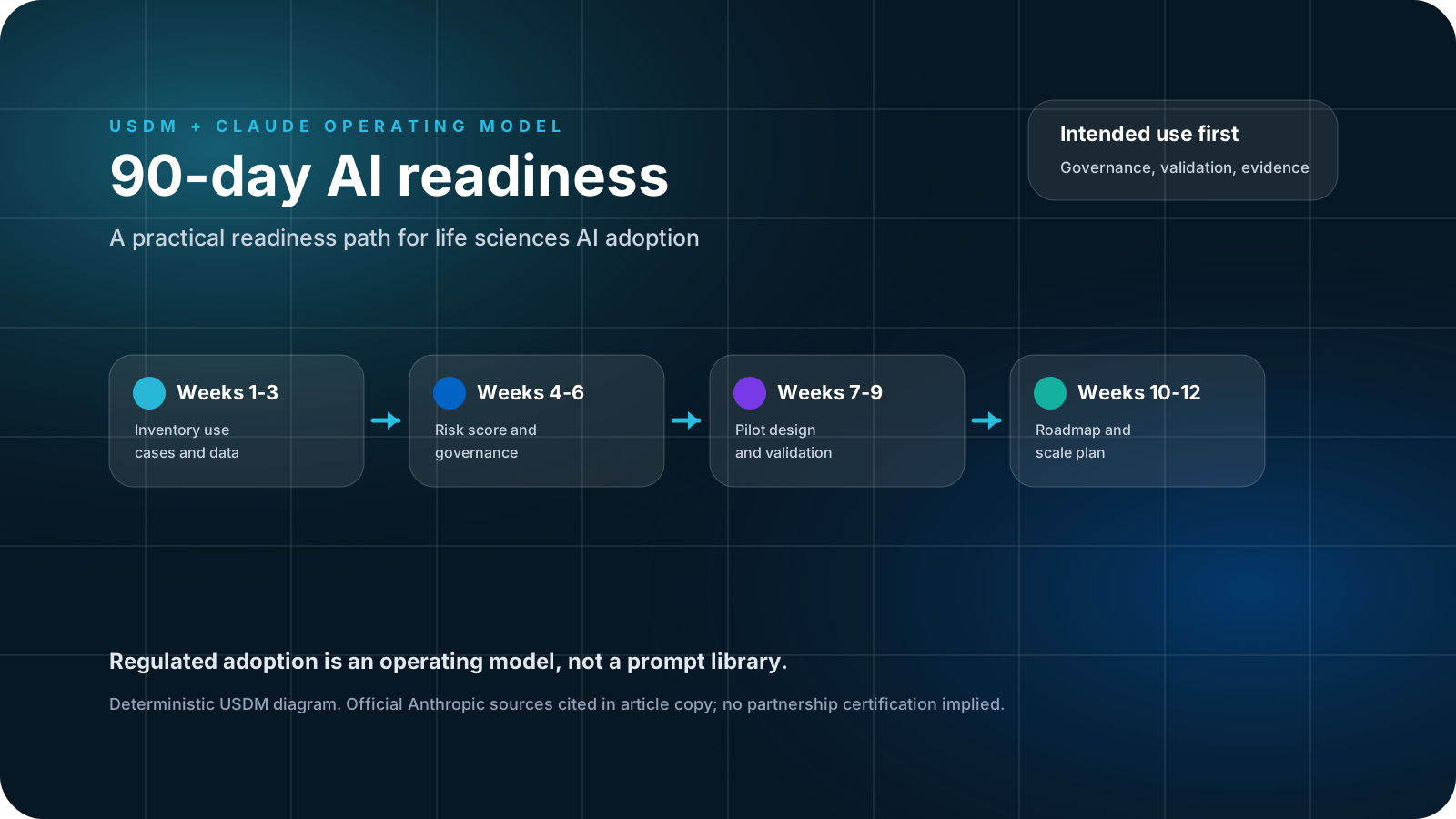
An AI readiness assessment life sciences teams can actually use should answer three questions in 90 days: where can AI create value, where can AI create regulated risk, and what operating model lets the organization move safely?
This matters for Claude, Glean, Microsoft, Google Cloud, Salesforce, Veeva, ServiceNow, Box, and every other platform adding AI features. The readiness problem is no longer hypothetical. AI is arriving through core enterprise systems whether or not the governance model is ready.
What an AI readiness assessment life sciences program covers
USDM structures readiness around practical decisions: use cases, data, platforms, risk, governance, validation, adoption, and evidence. The assessment should be lightweight enough to finish, but specific enough to guide funding and implementation.
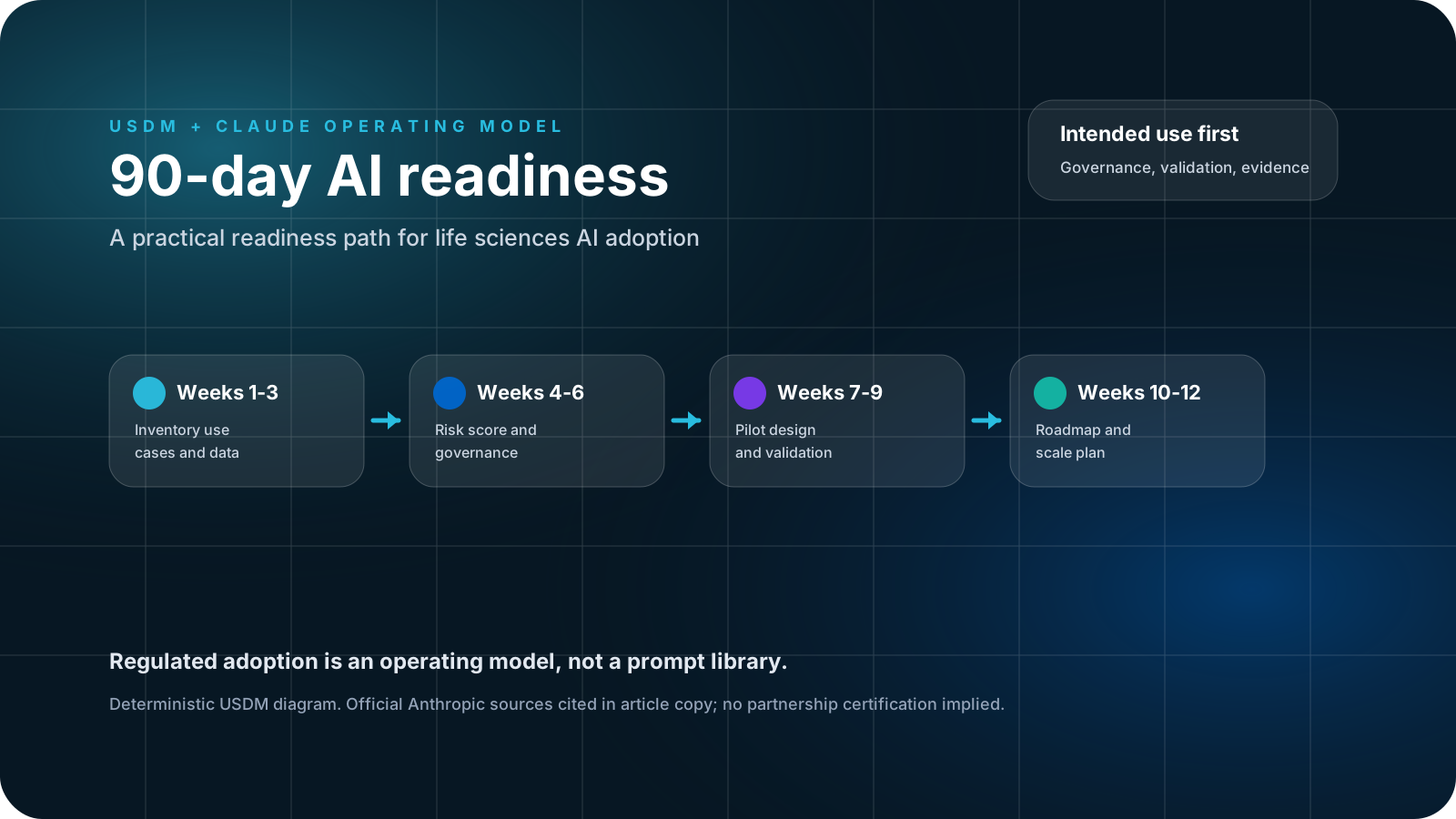
Days 1-21: inventory the real AI surface area
Start with the work already happening. Interview Quality, Regulatory, Clinical, Manufacturing, Medical, Commercial, IT, Security, Privacy, and Data leaders. Capture active pilots, shadow AI use, vendor AI features, embedded platform assistants, and high-value workflow pain points.
Include Claude-specific opportunities from the Anthropic Claude for life sciences operating model: governed co-work, connectors, skills, MCP, and agentic workflows. Also include non-Claude AI already embedded in enterprise applications.
Inventory outputs
- Use-case backlog by function and business value.
- Current AI tools and vendor AI features.
- Data classes and sensitive information involved.
- Existing policies, SOPs, validation procedures, and gaps.
- Known blockers: access, records, audit trail, privacy, model governance, or training.
Days 22-45: classify risk and governance needs
Use a simple but defensible scoring model. Consider GxP impact, patient safety, product quality, record criticality, privacy, cybersecurity, degree of automation, human review, and external communication risk.
The NIST AI RMF and ISO/IEC 42001 can inform governance design. FDA CSA principles help teams think critically about assurance activities for software used in production and quality system processes.
Risk tiers for fast prioritization
- Tier 1: personal productivity with no regulated record impact.
- Tier 2: business workflow support with human review and low GxP impact.
- Tier 3: GxP-adjacent workflows requiring documented controls.
- Tier 4: high-impact workflows affecting regulated decisions, records, or patient/product risk.
Days 46-70: design pilots that can survive scale
Select two to four pilots. Avoid the trap of choosing only the flashiest demo. Pick use cases with clear value, accessible data, manageable risk, strong business ownership, and measurable outcomes.
For Claude pilots, define the connector scope, prompt or skill controls, human review procedure, test scenarios, and evidence expectations. Read the companion posts on Claude regulated workflows and human-in-the-loop Claude prompts before moving into execution.
Days 71-90: build the roadmap and operating model
The final phase turns findings into action. The roadmap should identify quick wins, foundational controls, data remediation, platform governance, validation updates, training needs, budget, owners, and decision gates.
Readiness deliverables
- Executive summary with prioritized AI opportunities.
- Use-case portfolio with value/risk scoring.
- AI governance and validation gap assessment.
- Recommended pilots and success metrics.
- Platform and data control roadmap.
- Policy, training, and operating-model recommendations.
FAQ: AI readiness assessment for life sciences
How long should AI readiness take?
Ninety days is enough for a practical baseline if the scope is focused. The goal is not enterprise perfection; it is a defensible view of use cases, risks, controls, pilots, and the roadmap needed to move responsibly.
Should readiness happen before choosing a platform?
Yes, unless a platform decision has already been made. Readiness helps clarify which platforms, connectors, data controls, and validation approaches are required for the workflows that matter most.
What makes life sciences AI readiness different?
Life sciences readiness must account for GxP impact, data integrity, validation, patient safety, product quality, privacy, regulated records, vendor change, and inspection evidence. Generic AI governance is not enough.
Conclusion: 90 days to controlled momentum
An AI readiness assessment life sciences leaders can trust should create controlled momentum. It should show where to move fast, where to slow down, and where the operating model must mature before scale.
Start with USDM’s Anthropic Claude for life sciences perspective, compare it with the broader AI readiness assessment post, or contact USDM to build a 90-day readiness plan.