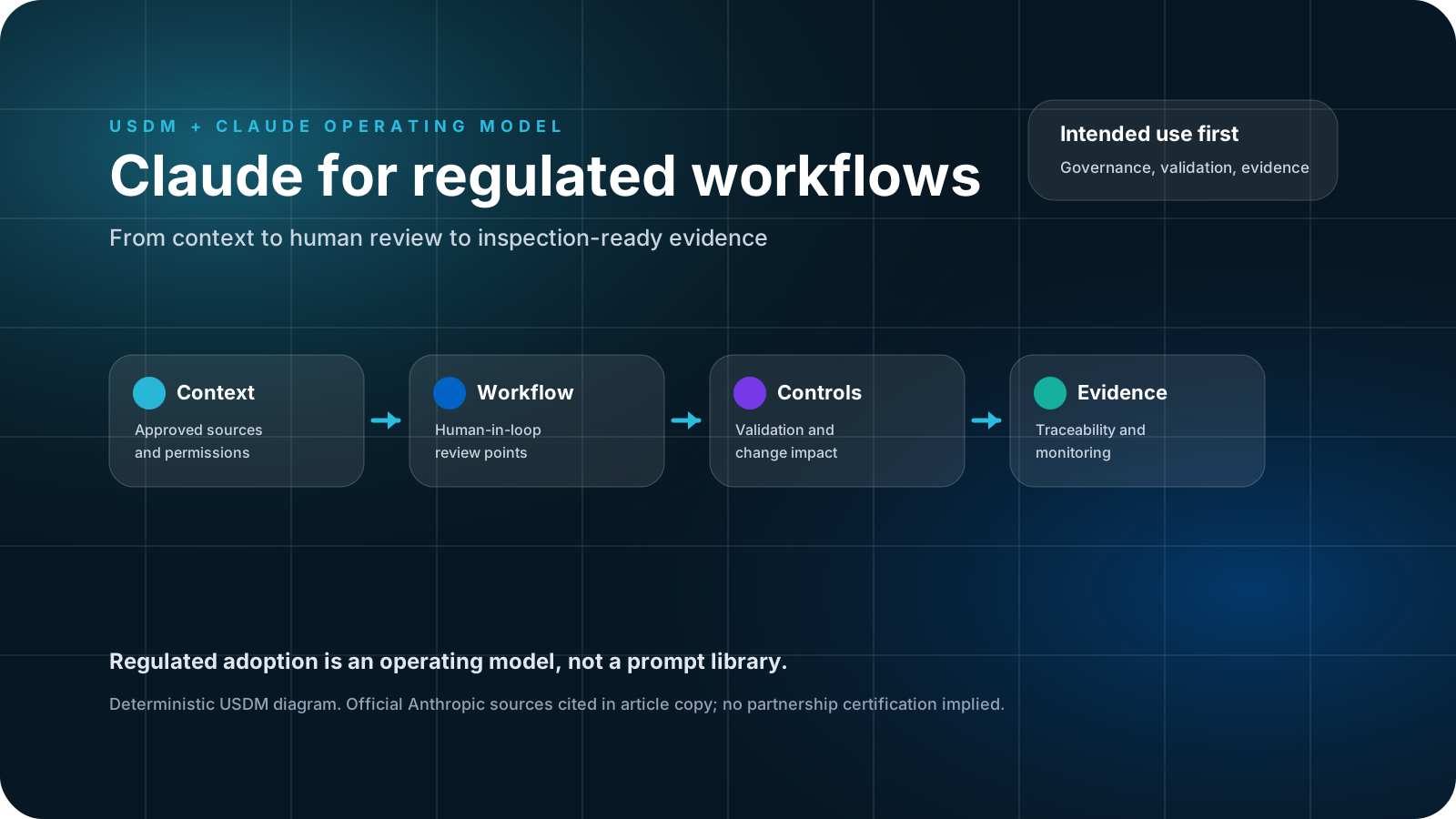
Anthropic Claude life sciences adoption should start with regulated workflow design, not a broad chatbot launch. Claude can help teams read, summarize, draft, compare, and reason across complex information, but life sciences organizations still own the controls around intended use, data access, human review, validation, and evidence.
Anthropic’s official Claude for life sciences page describes use cases for research, clinical development, commercial operations, and enterprise knowledge work. USDM’s point of view is narrower and more operational: Claude becomes useful in regulated work only when the workflow around Claude is governed.
Key takeaways
- Start with intended use and risk classification before expanding Claude access.
- Connectors, skills, and MCP should be treated as control surfaces, not convenience features.
- Human-in-the-loop review is the accountability model for regulated workflows.
- Evidence capture should be designed before the workflow reaches GxP-adjacent use.
What Anthropic Claude life sciences teams should govern first
The first decision is not which model to use. The first decision is which workflow Claude is allowed to support. A quality SOP comparison, a clinical operations briefing, a regulatory intelligence summary, and a commercial enablement draft each have different data boundaries and review expectations.
USDM recommends documenting five basics before production use: the business process, the user role, the approved source systems, the expected output, and the prohibited output. That simple intended-use statement gives Quality, IT, Security, Regulatory, and business owners a shared reference point.
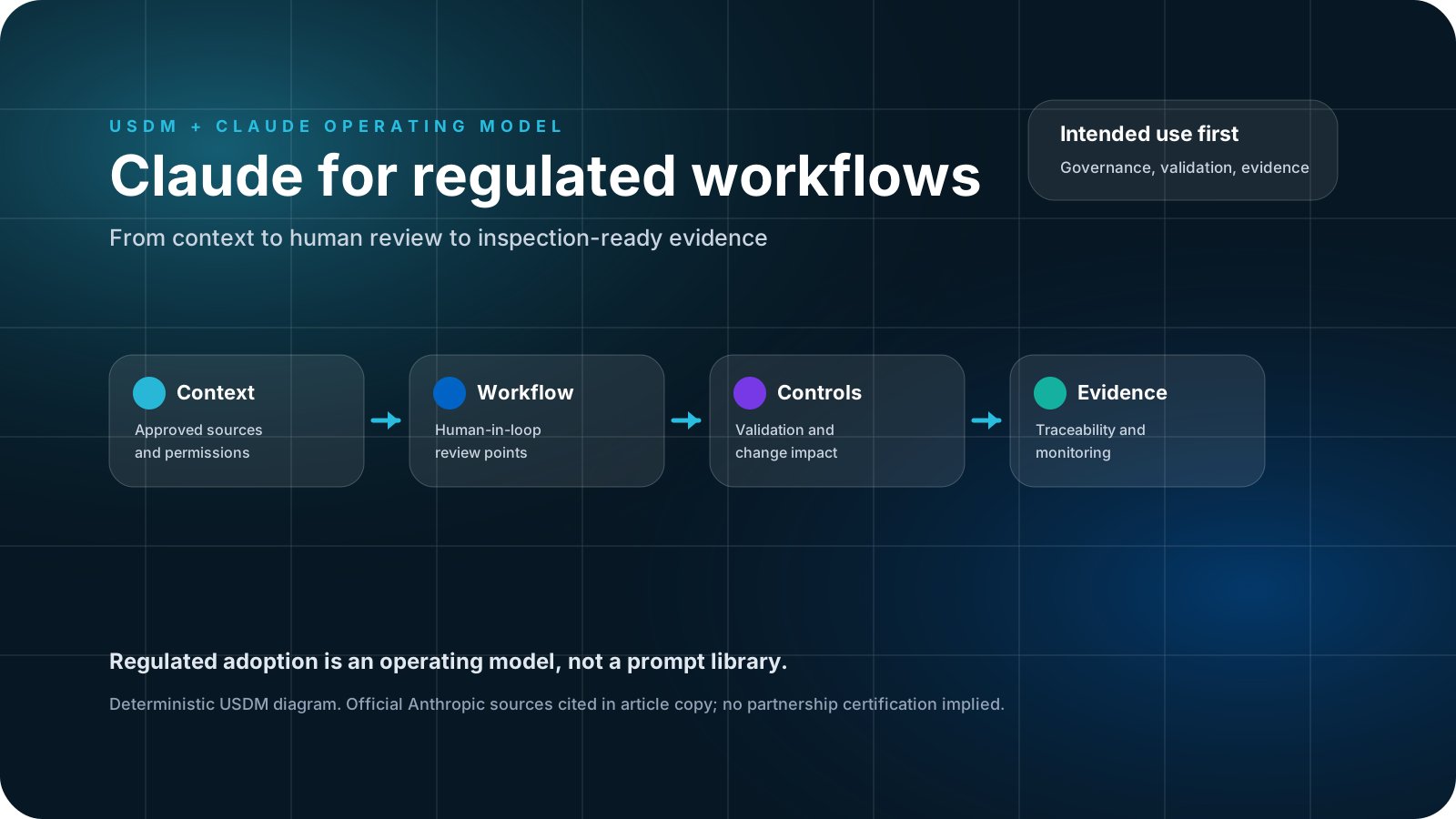
Use Claude as governed co-work, not uncontrolled automation
Anthropic positions Claude Cowork as Claude Code-style power for knowledge work. For life sciences teams, co-work is the right mental model because the human expert remains accountable for the regulated decision.
Claude can accelerate document comparison, meeting preparation, question answering, and synthesis. It should not silently become the system of record, the final approver, or an unreviewed decision engine. The difference is governance.
Practical candidate workflows
- Quality teams comparing SOP revisions and identifying review questions.
- Regulatory teams summarizing changes across guidance, submissions, and internal position papers.
- Clinical operations teams preparing site, protocol, and vendor briefings from approved materials.
- Medical affairs teams drafting first-pass content for medical/legal/regulatory review.
- IT and validation teams triaging release notes and change impact questions.
Connectors, skills, and MCP are regulated control layers
Claude connectors bring approved enterprise context closer to the user. Claude Skills package repeatable procedures. Anthropic’s Model Context Protocol is an open standard for connecting AI assistants to systems where data lives.
That product surface is powerful, but in a regulated environment every connection changes the risk profile. A connector can expand what Claude can see. A skill can standardize a repeatable procedure. MCP can support deeper tool and data access. Each one needs ownership, access review, testing, monitoring, and change control appropriate to the intended use.
How USDM structures a regulated Claude workflow
USDM typically frames Claude adoption across six layers: intended use, governed context, connector and tool access, skill design, human review, and evidence. This aligns with the broader Layer 0-5 Claude adoption model and the Anthropic Claude for life sciences partner page.
Minimum evidence expectations
- Approved use case and risk rationale.
- Data/source list and access boundaries.
- Prompt or skill version, where repeatable prompts are controlled.
- Human reviewer role and review criteria.
- Output disposition: accepted, revised, rejected, or escalated.
- Change impact process for connectors, skills, models, or workflow logic.
FAQ: Claude for regulated life sciences workflows
Can Claude be used in GxP workflows?
Potentially, but not by default. A GxP workflow needs intended use, risk assessment, validation strategy, human accountability, data controls, and evidence proportionate to the impact on patient safety, product quality, and regulated records.
Does using Anthropic Claude make a workflow validated?
No. A platform can provide capabilities, but validation is the regulated company’s responsibility. The organization must define intended use, test the configured workflow, manage change, and retain evidence appropriate to the process.
Where should a life sciences company start?
Start with a readiness assessment, then select a small number of high-value workflows with clear data boundaries and human review. USDM can help prioritize use cases through a regulated AI readiness assessment.
Conclusion: make Claude useful by making it governable
Anthropic Claude life sciences adoption should produce faster work and stronger control at the same time. The organizations that succeed will not be the ones with the most pilots. They will be the ones that turn Claude into governed co-work with clear context, validation, human review, and evidence.
Explore USDM’s Anthropic Claude services, review our Claude GxP validation framework, or contact USDM to plan a practical starting point.