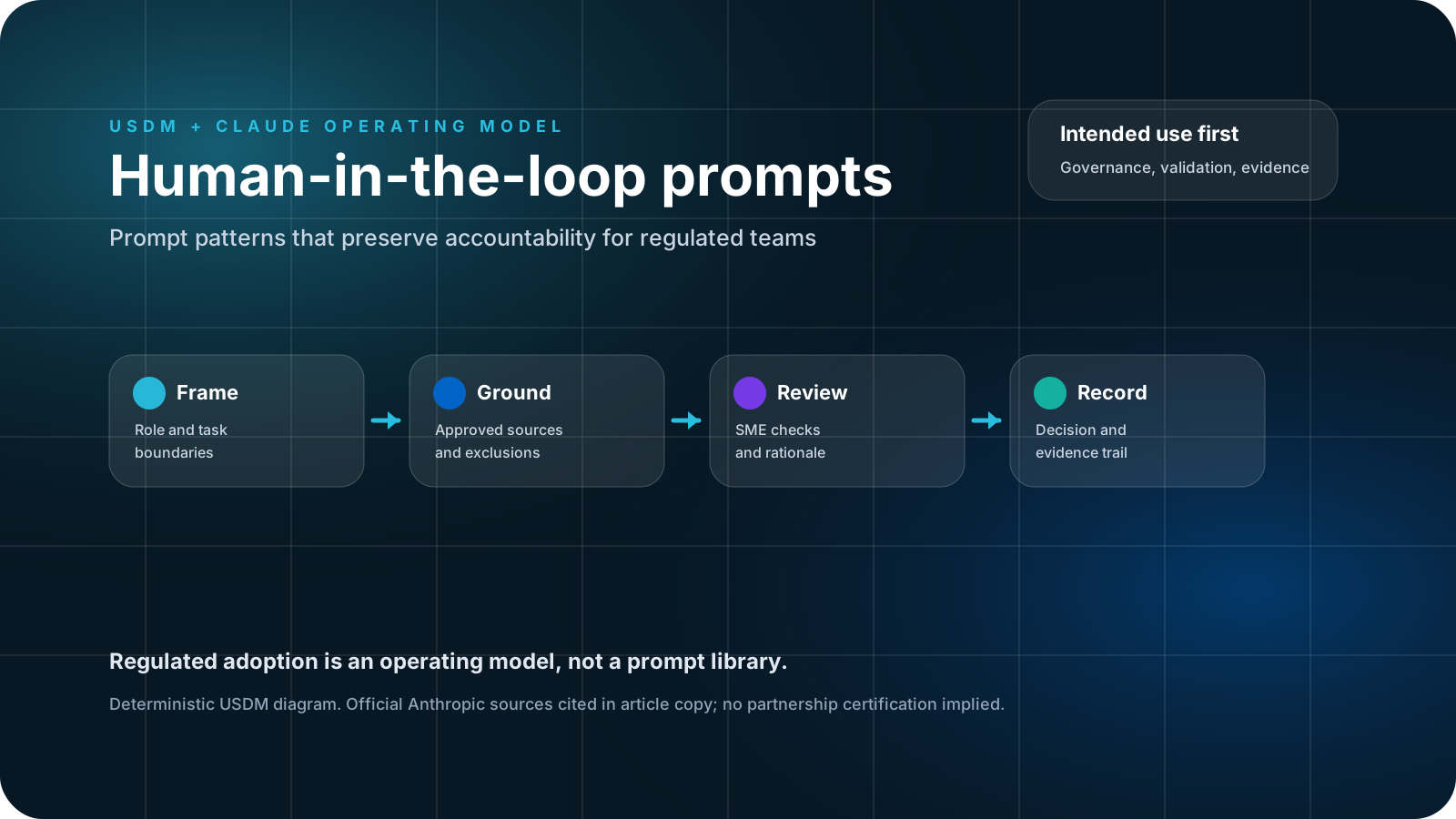
Human in the loop Claude prompts are not magic words. They are operating instructions that keep accountability where it belongs: with qualified people. In regulated life sciences, prompt design should make Claude easier to review, not harder to defend.
Anthropic describes Claude Skills as a way to package repeatable expertise and Claude connectors as a way to work with trusted tools. USDM recommends that regulated teams start even simpler: write prompts that define role, source boundaries, review expectations, and uncertainty handling before they become skills or workflow templates.
Prompt design principles
- State intended use and prohibited use.
- Ground Claude in approved sources and ask it to identify gaps.
- Require assumptions, uncertainty, and review questions.
- Separate draft generation from approval.
- Capture the prompt, source set, output, and reviewer decision when the workflow matters.
Why human in the loop Claude prompts matter
Claude can produce polished output quickly. That is useful, but polish can also hide weak sourcing, missing assumptions, or overconfident conclusions. Human-in-the-loop prompt patterns make review easier by forcing the output to expose its basis.
For regulated teams, the prompt should never imply that Claude is the approver. It should position Claude as an assistant that prepares a draft, comparison, checklist, or set of questions for a qualified reviewer.
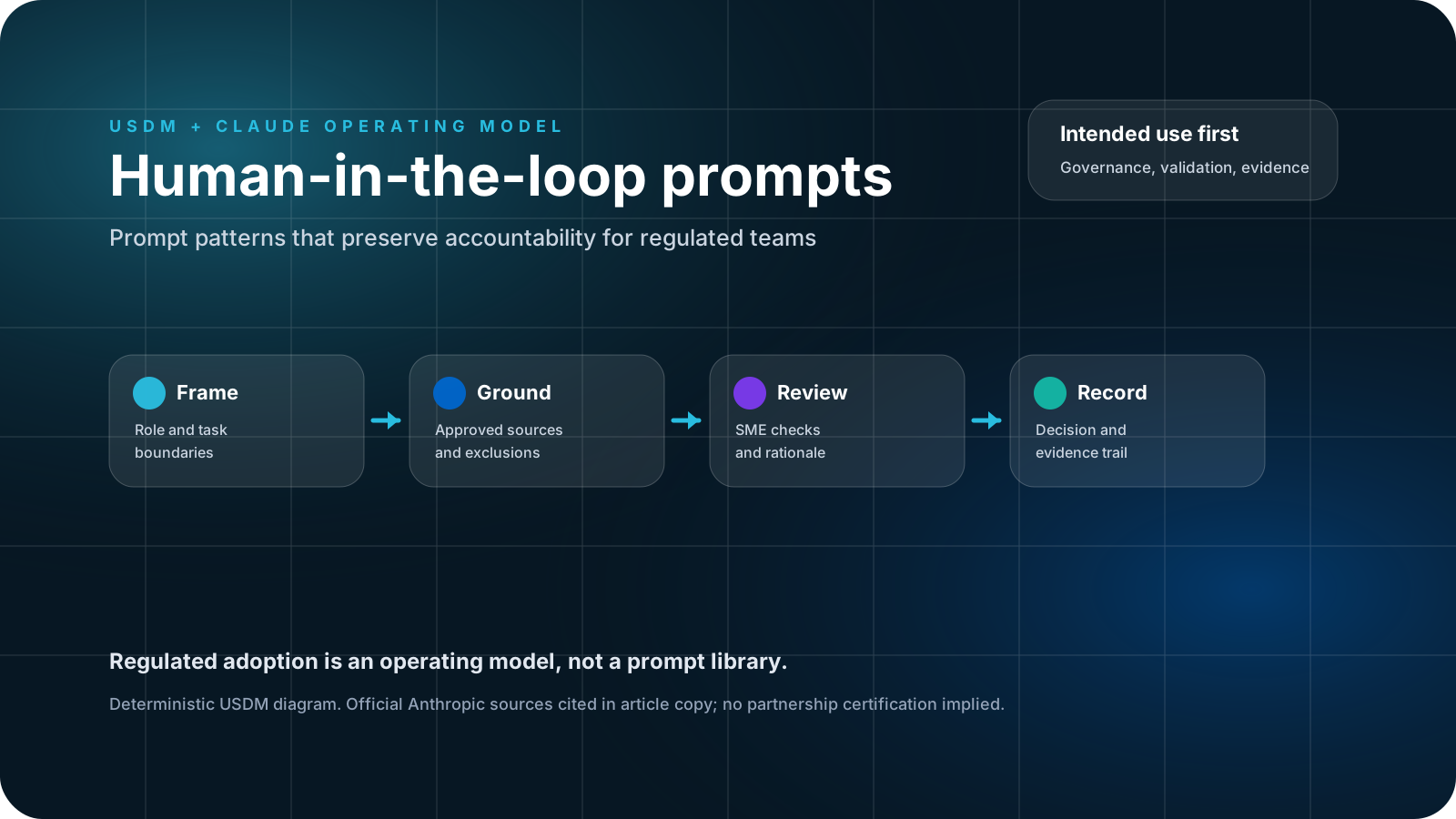
A reusable prompt pattern for regulated work
Use this structure for Claude-supported drafting, analysis, or comparison. Adapt it to your SOPs and quality procedures before using it in controlled workflows.
Example: SOP comparison prompt
“Compare SOP v3 and SOP v4 for training-impact review. Use only the two uploaded documents. Identify material process changes, new responsibilities, obsolete steps, and reviewer questions. Do not decide training impact. Format results as a table with source section references and a final list of items the Quality reviewer must confirm.”
Example: inspection readiness prompt
“Prepare an inspection-readiness briefing from the approved evidence list. Separate confirmed facts from missing evidence. Do not infer that evidence exists if it is not in the provided sources. End with a reviewer checklist and escalation questions.”
When prompts should become Claude Skills
Anthropic’s Claude Skills can package instructions, context, and procedures for repeatable tasks. Once a prompt is stable, reviewed, and used often, a skill can reduce variability. That is helpful for regulated teams because consistency makes training, testing, and change control easier.
Before converting a prompt into a skill, confirm the owner, intended use, required inputs, expected output format, review criteria, versioning process, and retirement process.
Use connectors and MCP carefully
Claude connectors and the Model Context Protocol can give Claude access to enterprise systems and data. That can improve context, but it also raises governance stakes. Human-in-the-loop prompts should tell Claude which sources are in scope and require it to identify when source evidence is insufficient.
Reviewer evidence to retain when appropriate
- Prompt or skill version used.
- Source documents or systems in scope.
- Claude output and reviewer disposition.
- Reviewer comments, edits, or rejection rationale.
- Any escalation or CAPA/change-control linkage.
FAQ: human in the loop Claude prompts
What makes a Claude prompt human-in-the-loop?
It assigns Claude an assistant role, defines boundaries, requires transparent reasoning artifacts such as assumptions and source references, and reserves approval or regulated decision-making for a qualified human reviewer.
Should every prompt be controlled?
No. Control should be risk-based. Informal low-risk productivity prompts may not need formal versioning. Repeatable prompts used in GxP-adjacent workflows should be reviewed, trained, versioned, and monitored.
Can prompt templates replace validation?
No. Templates improve consistency, but validation depends on intended use, workflow controls, test evidence, data boundaries, reviewer accountability, and lifecycle management.
Conclusion: prompts are part of the control system
Human in the loop Claude prompts help regulated teams use Claude without pretending the model owns the decision. The best prompts make work faster and review clearer at the same time.
Read the companion post on Claude in GxP AI Governance and Validation, explore USDM’s Anthropic Claude services, or see how USDM thinks about agentic teams.